Having your own leather journal is, at heart, having a space reserved for you. A place that goes with you, where you can write what you think, organise what you have on your plate and keep what you do not want to lose.
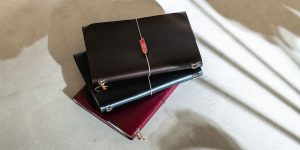
At notāre, when we talk about a travel journal we mean this leather cover system with interchangeable inner notebooks, in Muse (A5) or Nomad (passport size) format. Both can become your travel journal: one with more space, the other lighter.
The difference is not only in the format, but in how you use it. The same journal can be a daily diary, a simple planner, a project notebook, a habit tracker or a creative space. In this article we look at five ways to use your travel journal in your everyday life, so you can find the use, or combination of uses, that makes the most sense for you right now.
1. For journaling
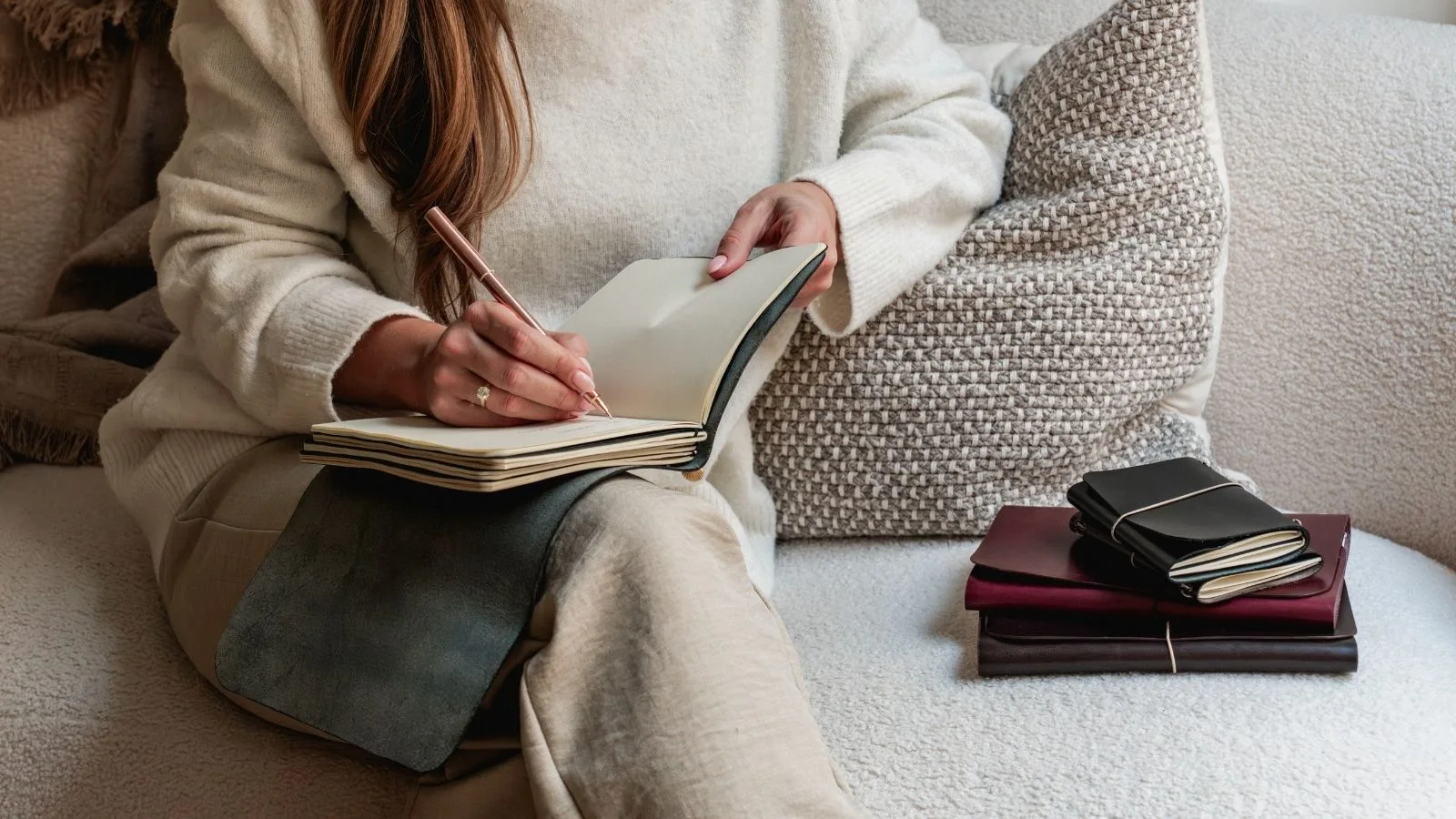
One of the most natural ways to use your travel journal is as a journaling space, your daily travel journal where you write about how you are, what you think and what you need at each stage.
It does not have to be deep or perfect every time. It can be:
- Free pages where you pour out whatever is on your mind.
- Short notes at the end of the day: what went well, what was difficult, what you would like to take care of tomorrow.
- A small morning or evening ritual, even if it is just a few lines.
Depending on how you like to write, you can use Muse if you enjoy writing longer paragraphs and mixing text with diagrams or lists, or Nomad if you prefer something shorter, like a quick pocket check-in: three lines, a keyword, a mini reflection while you wait for a coffee.
If you want to go deeper, you can lean on the article How to start journaling and stay consistent and adapt those ideas to your travel journal.
2. As a planner for your schedule and goals
Another way to make the most of your travel journal is to use it as a simple planner, a planning notebook focused on what matters rather than on filling in boxes.
Some ideas:
- A very simple monthly overview, with a few lines per day to note appointments, deadlines or key moments.
- A page at the beginning of each month with your main goals: what you would like to move forward at work, in your personal life and in self-care.
- A weekly priorities section with three things you really want to get done.
Here Muse is usually the most comfortable format. It lets you combine monthly views, weekly lists and notes pages without feeling cramped, and you can dedicate one inner notebook just to planning and goals, and another to journaling, within the same system.
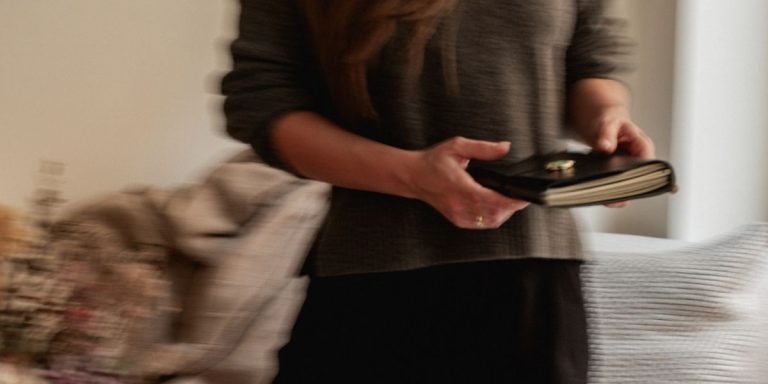
Nomad can also work as an ultra-light planner. You can use one page per week with bullets and keep a monthly goals list that you always carry with you, so you can review and update it on the go.
3. For tracking habits and small routines
Your travel journal can also be a very useful place for tracking habits and small routines you want to strengthen.
You do not need a complex system. Simple formats are enough, for example:
- A basic table with the days of the month and three or four habits, like drinking water, walking, writing, reading or turning screens off before a certain time.
- A list where you write the habit and mark each day you complete it with a symbol.
- Pages where you note how you felt at the end of the week, connecting habits with your energy and mood.
You can adapt it to your personality. If you tend to be very hard on yourself, it helps for the tracking to be gentle, more about observing than judging. If you need structure, seeing your days marked on paper can help you understand that progress is less about doing it perfectly and more about coming back to it again and again.
Muse will give you more space to combine trackers, notes and short reflections. Nomad is ideal if you want to mark habits in the moment, as a natural part of your daily routine.
4. As a notebook for work and projects
A travel journal can also work as a notebook for work and projects, not only for the personal side of your life.
You can use it as your project notebook for:
- Notes from meetings, calls and important conversations.
- Idea sketches, simple mind maps and presentation drafts.
- Task lists by project, separating the urgent from the important.
- Short summaries at the end of the day: what you moved forward and what is still pending.
Here it often works well to combine both formats. Muse can be your main desk notebook, where you develop ideas, organise projects and write with more space. Nomad can support you in meetings outside the office, coffee shop work sessions or short trips, where you capture the essentials and later expand them in Muse if you need to.
Within the notāre system, you can dedicate one inner notebook just to projects and work, and another to personal life, keeping everything in the same cover but clearer in your mind.
5. As a creative and artistic space
Finally, your travel journal can be a creative and artistic space you come back to when you feel like playing with paper.
Some ideas for creative use:
- Making small sketches or quick drawings.
- Practising lettering or different ways of writing titles and words.
- Creating collage pages with cut-outs, paper scraps, tickets, small photos or labels you like.
- Turning it into an ideas and inspiration notebook with lists of books, music, quotes, places or colours that catch your attention.
Muse is very comfortable if you like pasting things, making bigger collages or combining drawing and writing without worrying about space. Nomad, on the other hand, works like a small pocket sketchbook, something you take out on the train, on a bench in the sun or in a café.
It is not about making every page perfect, but about having a place where you can try things with no expectations, simply for the pleasure of creating.
Several uses in the same notāre thanks to the modular system
The advantage of notāre being a leather cover system with interchangeable inner notebooks is that you do not have to choose a single use for your travel journal.
In the same notāre you can have:
- One inner notebook for journaling.
- Another one for planning, schedule and goals.
- Another for work and projects.
- A few pages reserved for habits or for collages and creative ideas.
You can reorder the notebooks, add a new one when you fill the previous one, remove the one you no longer need or move important pages to another refill.
Instead of having many separate notebooks, you have a modular travel journal system that adapts to your life. When your priorities change, the notebooks you carry inside change with them.
And if you do not have a travel journal yet
If you feel like starting to use a travel journal in your everyday life, with notāre you can configure the system in two formats:
- Muse (A5) if you need space to write, plan, make collages and draw calmly, mostly at a desk.
- Nomad (passport size) if you want something light, easy to carry everywhere and perfect for quick notes, habits and idea capture.
Both share the same idea: a leather cover designed to last and inner notebooks you can change at your own pace. You can start with the use that calls you the most right now and let the rest come little by little. In the end, a travel journal is less about how many kilometres you travel and more about how you choose to write your everyday life.