Having a travel journal is not only about travelling.
It can also be a way of carrying a personal space with you: a place to write what you think, organise what you are working on and keep ideas, lists or memories you do not want to lose.
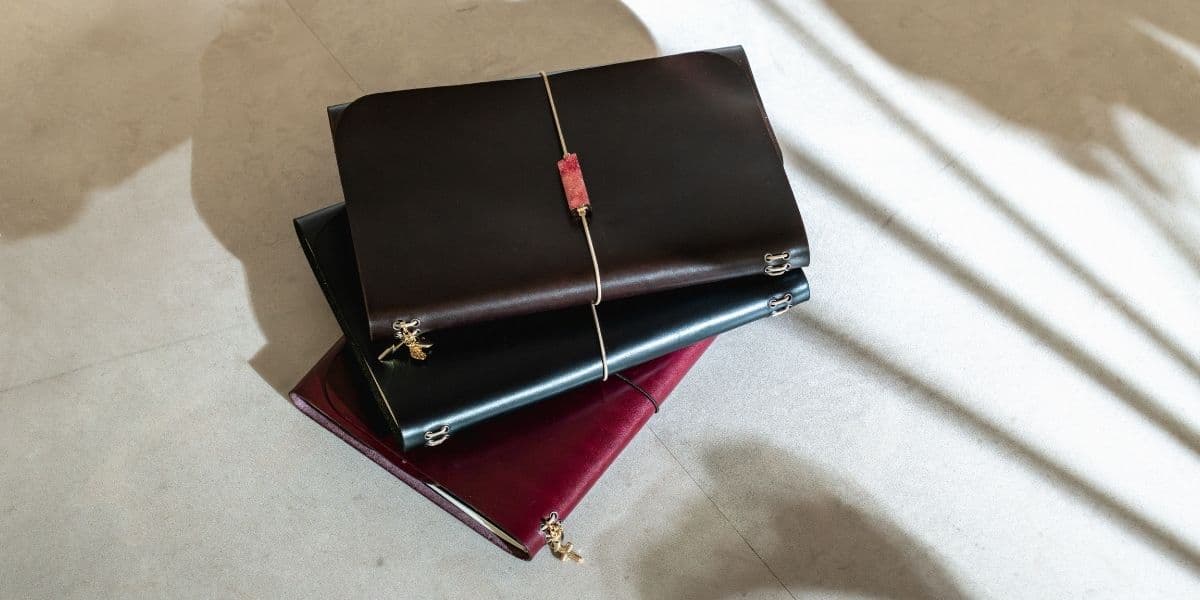
At notāre, when we talk about a travel journal, we mean a system: a leather cover with interchangeable notebook inserts. You can choose Muse, in A5, or Nomad, in passport size. One gives you more space; the other is lighter and easier to carry.
The difference is not only in the format, but in how you use it. The same journal can become a diary, a planner, a project notebook, a habit tracker or a creative space.
Here are five ways to use your travel journal in everyday life.
1. For journaling
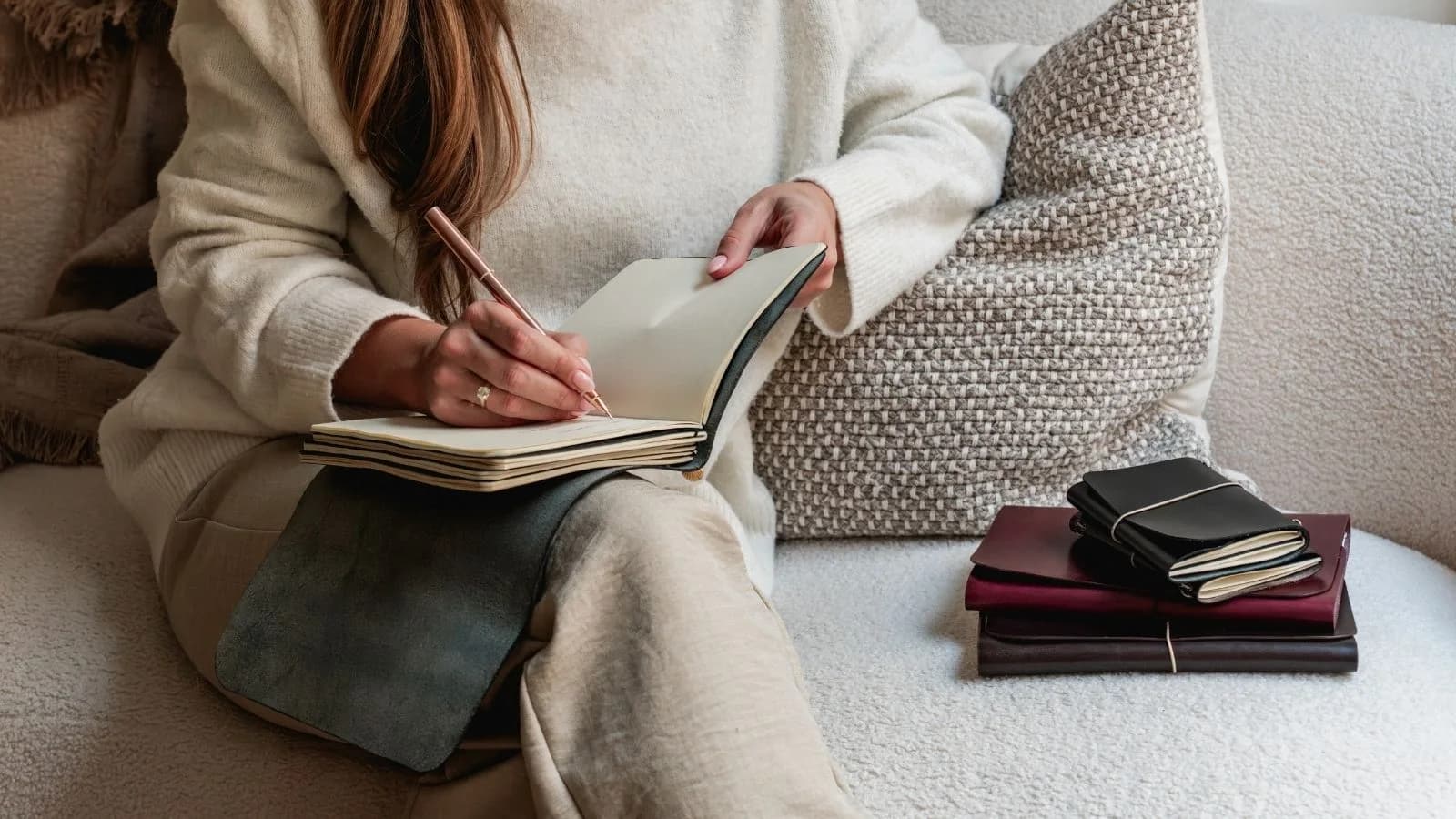
One of the most natural ways to use your travel journal is as a space for journaling.
It does not need to be deep, perfect or daily. It can be much simpler than that: a few lines at the beginning of the day, a free page at night or a short note when you need to organise what is on your mind.
You can use it to:
- Write how you are.
- Close the day with three lines.
- Note something you want to remember.
- Empty your thoughts before sleep.
- Return to yourself when you need a pause.
Muse works well if you like having space to write, develop ideas or combine text with lists and small reflections.
Nomad may suit you better if you prefer something brief and close to hand: a sentence, a keyword, an idea that appears in the middle of the day or a small check-in while waiting for coffee.
Suggested internal link: How to start journaling and keep it over time.
2. For planning and goals
Your travel journal can also work as a simple planner.
It does not need to become a complex system. It can be enough to dedicate a few pages to organising the month, reviewing the week or writing down the priorities you want to keep present.
You can use it for:
- A simple monthly overview.
- Monthly goals.
- Weekly priorities.
- Important task lists.
- Short reviews of what you have moved forward.
Muse is usually the most comfortable format for planning. It gives you space to combine monthly views, weekly lists, notes and reviews without everything feeling too compressed.
Nomad can also work as a light planner: one page per week, a short list of goals or small reminders you can carry with you.
If you use a notāre, you can dedicate one notebook insert to planning and another to journaling. Each thing has its place, while staying together in one piece.
3. For habits and small routines
A travel journal can help you observe your habits without turning them into another obligation.
You do not need a complicated tracker. Sometimes a simple table, a list or a few marks at the end of the day are enough.
You can use it to follow habits such as:
- Writing.
- Reading.
- Walking.
- Drinking water.
- Resting better.
- Turning off screens before sleep.
You can also add a short weekly note: how your energy felt, what helped, what you want to adjust or which habit you want to take care of a little more.
The key is not to turn the tracker into a place where you judge yourself. It can simply be a way to look more clearly at how your days repeat.
Muse gives you more space to combine trackers, notes and small reflections. Nomad works well if you want to mark habits in the moment, without carrying a larger journal.
4. For work and projects
A travel journal can also support the way you work.
It can help you take meeting notes, organise ideas, prepare projects or separate what is urgent from what is important. Not everything has to live in digital tools.
You can use it as a work notebook for:
- Meeting notes.
- Project ideas.
- Lists by client or area.
- Presentation drafts.
- Simple diagrams or maps.
- End-of-day or weekly reviews.
Muse works very well as a main work journal. It gives you space to develop ideas, write clearly and keep notes, lists and projects within the same system.
Nomad can be a support for meetings outside the office, work cafés, travel days or moments when you only need to capture what matters.
Within the notāre system, you can dedicate one notebook insert to work and another to personal pages. Everything travels with you, but each thing keeps its place.
5. As a creative space
Your travel journal can also be a place to create without a specific objective.
Not every page has to help you organise something. Some pages can exist simply to try things, keep inspiration or play with paper.
You can use it for:
- Quick sketches.
- Small collages.
- Sentences you find.
- Lists of books, music or places.
- Visual ideas.
- Loose words.
- Tickets, labels or papers you want to keep.
Muse is more comfortable if you like sticking things in, drawing, combining text and image or creating wider pages.
Nomad works as a small creative notebook for your pocket: something you can open on a train, in a café or during a short pause in the day.
It is not about making every page look good. It is about having a place to try things without too much expectation.
Several uses in one notāre
The advantage of a modular travel journal is that you do not have to choose only one use.
Different notebook inserts can live inside the same notāre:
- One for journaling.
- One for planning.
- One for work or projects.
- One for habits, ideas or creative pages.
You can change the order, add a new notebook when you need it or remove one you are no longer using.
Instead of carrying many separate notebooks, you have one leather cover and a configuration that can change with you. The cover stays; the notebook inserts can be combined and renewed according to your moment.
Create your notāre
If you want to start using a travel journal in your everyday life, you can begin with the use that makes the most sense now.
Muse, in A5, if you want more space to write, plan, work or create at a table.
Nomad, in passport size, if you are looking for a light piece, easy to carry and made for quick notes, habits or ideas in movement.
Both share the same idea: a leather cover designed to last and notebook inserts you can change at your own pace.
You can begin with one simple use and let the rest arrive little by little. In the end, a travel journal is not only about the places you go, but about how you choose to write what happens in your everyday life.
Discover the travel journals by notāre and create a piece made to accompany you.